
Best Magnesium for Migraine Prevention: Ranked by Form, Absorption, and Clinical Evidence
Magnesium oxide barely absorbs. AHS-endorsed migraine prevention needs a bioavailable form taken for 3–6 months.
Moderate-Strong

This content is for educational purposes only and is not medical advice. These statements have not been evaluated by the FDA. This product is not intended to diagnose, treat, cure, or prevent any disease. Always consult your healthcare provider before starting any supplement.
Best Magnesium for Migraine Prevention in 2026
Ranked by quality, value, and clinical backing
Where available, we show when each product price was last checked so the list stays honest without overreacting to normal Amazon price movement.

Doctor's Best High Absorption Magnesium Glycinate
Doctor's Best High Absorption Magnesium Glycinate — third-party tested. 4.6★ (38,200 ratings). Confirmed in stock.
- Amazon price and availability can change over time
Affiliate link: If you buy through this link, we may earn a commission at no extra cost to you.
Buy Doctor's Best High Absorption Magnesium Glycinate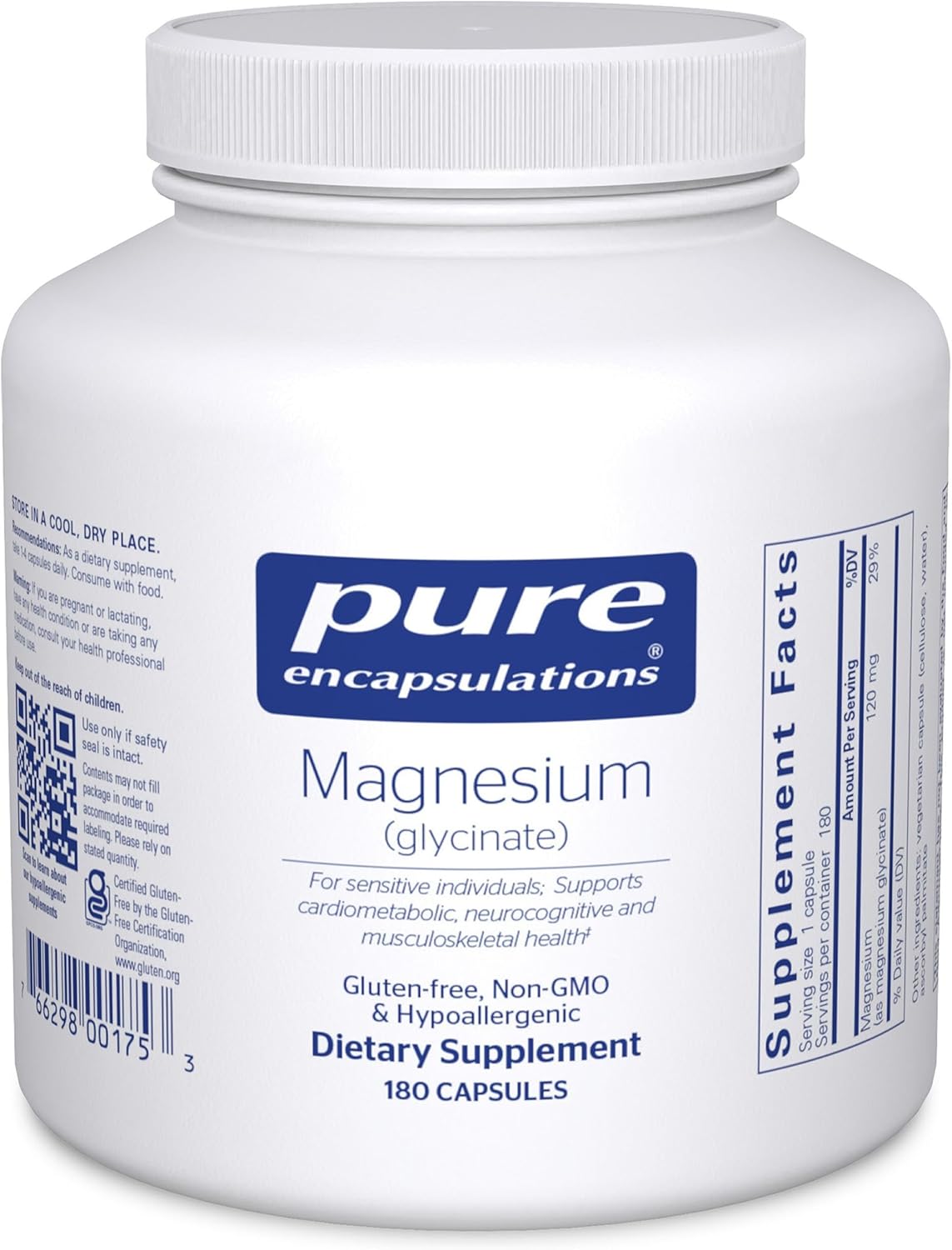
Pure Encapsulations Magnesium Glycinate
Pure Encapsulations Magnesium Glycinate — third-party tested. 4.7★ (48,063 ratings). Confirmed in stock.
- Premium price point relative to comparable options
Affiliate link: If you buy through this link, we may earn a commission at no extra cost to you.
Buy Pure Encapsulations Magnesium Glycinate
Thorne Magnesium Bisglycinate
Thorne Magnesium Bisglycinate — third-party tested. 4.4★ (2,456 ratings). Confirmed in stock.
- Premium price point relative to comparable options
Affiliate link: If you buy through this link, we may earn a commission at no extra cost to you.
Buy Thorne Magnesium Bisglycinate
NOW Foods Magnesium Citrate
NOW Foods Magnesium Citrate — third-party tested. 4.7★ (24,951 ratings). Confirmed in stock.
- Lower price may reflect a smaller count or serving size — check the label
Affiliate link: If you buy through this link, we may earn a commission at no extra cost to you.
Buy NOW Foods Magnesium CitrateCompare supplements with the same checklist we use.
Get the anti-aging supplement cheat sheet with evidence prompts, safety checks, and label-quality questions before you buy.
Comparison Table
| Category | #1 Doctor's Best High Absorption Magnesium Glycinate Doctor's Best | #2 Pure Encapsulations Magnesium Glycinate Pure Encapsulations | #3 Thorne Magnesium Bisglycinate Thorne | #4 NOW Foods Magnesium Citrate NOW Foods |
|---|---|---|---|---|
| Score | 8.8/10 | 9/10 | 8.4/10 | 9/10 |
| Best For | ||||
| Pros |
|
|
|
|
| Cons |
|
|
|
|
What to Know About Magnesium for Migraine Prevention
Magnesium is one of the few supplements with genuine, peer-reviewed support for migraine prophylaxis — and yet most people who've tried it gave up on a form that barely absorbs. That's the core problem we're addressing here. If you bought magnesium oxide at a drugstore, took it for two months, and felt nothing, that experience tells you more about bioavailability than it does about magnesium itself. Research consistently shows that people who experience frequent migraines tend to have lower intracellular magnesium levels than those who don't. Magnesium plays a central role in regulating cortical spreading depression — the neurological wave thought to underlie migraine aura — and in modulating NMDA receptor activity, which drives neuronal hyperexcitability. These aren't theoretical mechanisms. They're the rationale behind why the American Headache Society includes magnesium in its list of evidence-supported preventive options. This guide ranks four highly bioavailable magnesium products specifically chosen for migraine prevention. We've prioritized forms with demonstrated absorption, third-party quality verification, and pricing that makes a 3-to-6-month trial — the minimum needed to judge efficacy — actually sustainable. Whether you're dealing with episodic migraine, menstrual migraine, or simply want to address the neuronal hyperexcitability that also accelerates cortical aging, there's a form here that fits your situation.
This content is for educational purposes only and is not medical advice. These statements have not been evaluated by the FDA. This product is not intended to diagnose, treat, cure, or prevent any disease.
Key Benefits of Magnesium for Migraine Prevention
May help reduce migraine attack frequency with consistent use over 12+ weeks, based on multiple RCTs using 400–600mg daily of bioavailable forms
Addresses the perimenstrual magnesium dip associated with menstrual migraine, making targeted supplementation a rational low-risk strategy for this subtype
Supports neuronal excitability regulation and NMDA receptor modulation — mechanisms relevant to both migraine prevention and long-term cortical health
How Magnesium Supports Migraine Prevention
Magnesium functions as a gatekeeper at the NMDA glutamate receptor. Under normal physiological conditions, magnesium ions sit inside the receptor channel and block excessive calcium influx. When intracellular magnesium is depleted — a state that appears more common in people with frequent migraines — this block weakens, allowing glutamate-driven excitatory cascades to proceed more easily. The result is a lower threshold for cortical spreading depression, the slowly propagating wave of neuronal depolarization that underlies migraine aura and is now believed to be involved in non-aura attacks as well. Magnesium also plays a role in stabilizing serotonin receptors, regulating platelet aggregation, and influencing substance P release — all pathways implicated in migraine pathophysiology. Supplementation with highly bioavailable forms may help restore intracellular magnesium levels over weeks to months, gradually raising the neurological threshold needed to trigger an attack. This is why the timeline matters: magnesium doesn't work acutely the way a triptan does. It operates upstream, shifting the baseline biology that makes the brain migraine-prone in the first place.
What to Look For When Buying Magnesium
The single most important variable in choosing a magnesium supplement for migraine prevention is form. Magnesium oxide — the version filling most pharmacy shelves — has a bioavailability of roughly 4%, meaning nearly all of what you swallow passes straight through. Glycinate, bisglycinate, and citrate forms absorb meaningfully better in most people. The glycinate chelates (including bisglycinate, which is just a name for the fully chelated version) bind magnesium to glycine molecules that survive stomach acid intact and are taken up through amino acid transport pathways in the small intestine. Citrate forms are absorbed through a different organic acid pathway and have the clinical trial precedent of the Peikert study behind them. Dosage is the second variable. Most published migraine trials used 400–600mg of elemental magnesium daily, usually split into two doses. When reading labels, the number that matters is elemental magnesium — not the total weight of the compound. A product listing 500mg of magnesium glycinate delivers less than 100mg of elemental Mg, because the glycine molecules make up most of the compound weight. Always check the "Amount Per Serving" of elemental magnesium, not the compound weight. Third-party testing matters more here than people realize. The supplement industry is largely self-regulated, and independent audits by organizations like NSF or USP verify that what's on the label is actually in the bottle — and that contamination with heavy metals or undisclosed ingredients is absent. For a supplement you'll be taking daily for six months, that's not a premium luxury. It's a reasonable expectation. Finally, think about the practical reality of a six-month trial. A format that's inconvenient — hard to travel with, unpleasant to take, or too expensive to maintain — will fail through non-adherence before you ever know whether the magnesium was working. Matching the format to your lifestyle is as clinically important as matching the form to the evidence.
Dosage Guidance
Always follow your healthcare provider's recommendations. Dosages vary by individual health status, age, and goals.
Common Magnesium Complaints (And How to Avoid Them)
Based on analysis of thousands of customer reviews across Magnesium products.
"I took magnesium for 4 weeks and my migraines didn't change"
Four weeks isn't enough time. Published trials ran 12 weeks minimum. Neurological threshold changes are gradual — keep a migraine diary and assess at the 3-month mark before concluding it isn't working.
"Magnesium gives me diarrhea"
This is almost always a formulation or dose issue. Citrate and oxide forms are most likely to cause loose stool. Switching to magnesium glycinate or bisglycinate and starting at 100–200mg/day before titrating up typically resolves this in the first 7–10 days.
"I don't know how much elemental magnesium I'm actually getting"
Always read the Supplement Facts panel and look specifically for the 'elemental magnesium' figure in milligrams — not the weight of the magnesium compound. For glycinate chelate, elemental Mg is roughly 14–16% of the compound weight. All four products on this list clearly disclose elemental Mg content on the label.
Safety & Interactions
- Pregnancy and breastfeeding: Consult your healthcare provider before taking this supplement during pregnancy or while nursing. The safety of supplemental doses beyond dietary intake has not been established in pregnant or lactating women.
- Blood thinners: If you take blood-thinning medications (e.g., warfarin, apixaban, rivaroxaban, clopidogrel, or high-dose aspirin), consult your healthcare provider BEFORE starting this supplement, as it may have additive antiplatelet or anticoagulant effects.
- Kidney disease: If you have chronic kidney disease (CKD) or any significant kidney impairment, consult your healthcare provider before taking this supplement. Some supplements can accumulate to dangerous levels when kidney function is reduced.
- Gout: Individuals with gout should consult their healthcare provider before starting this supplement. Certain supplements (e.g., collagen, fish oil, niacin) may affect uric acid levels or trigger flares in susceptible individuals.
- Fish allergy - capsule source: Some softgel capsules use fish-derived gelatin even when the active supplement is not fish-derived. If you have a confirmed fish or shellfish allergy, verify the capsule source on the label or check with the manufacturer. Vegan capsules (vegetable cellulose) are widely available alternatives.
- Beef / alpha-gal allergy - capsule source: Many softgel and two-piece capsules use bovine gelatin. If you have a confirmed beef allergy or alpha-gal syndrome (mammalian meat allergy), check capsule sources on the label. Vegan capsules (vegetable cellulose) and HPMC capsules are alternatives.
- Upper intake limit: The NIH tolerable upper intake level (UL) for supplemental magnesium is 350mg/day for adults. Exceeding this chronically without medical supervision increases risk of diarrhea, cramping, and electrolyte imbalance. Products providing >350mg/serving (e.g., SOLARAY 400mg, NOW Foods Magnesium Malate 425mg) should be dose-titrated — start with 1–2 capsules rather than the full serving.
- Drug separation: Magnesium reduces absorption of tetracycline antibiotics, fluoroquinolones (ciprofloxacin), bisphosphonates (alendronate), and thyroid medications (levothyroxine). Separate magnesium from these by at least 2 hours — 4–6 hours for tetracyclines. Long-term PPI use (omeprazole, esomeprazole, lansoprazole) can deplete magnesium; monitor levels if on chronic PPI therapy.
- Take with food: Taking magnesium with food improves absorption and significantly reduces loose stools or digestive discomfort. Citrate and oxide forms act as osmotic laxatives — always take with a full glass of water. Do not use osmotic laxative forms daily without medical guidance; chronic use can lead to dependence.
- Important: This supplement is not a replacement for prescription medications. It is supportive for individuals with low baseline status, not a treatment for diagnosed conditions (anxiety disorders, insomnia, hypertension, osteoporosis, etc.). Do not stop or reduce any prescription without consulting your doctor.
Frequently Asked Questions
Citations & Research
This page references peer-reviewed research indexed on PubMed/NCBI. Citations are provided for transparency. Always consult a qualified healthcare professional before making any medical decisions.
- [1]von Luckner A, Riederer F. “Magnesium in Migraine Prophylaxis-Is There an Evidence-Based Rationale? A Systematic Review.” Headache, 2018. doi:10.1111/head.13217PMID 29131326 ↗
- [2]Talandashti MK, Shahinfar H, Delgarm P et al. “Effects of selected dietary supplements on migraine prophylaxis: A systematic review and dose-response meta-analysis of randomized controlled trials.” Neurological Sciences, 2025. doi:10.1007/s10072-024-07794-0PMID 39404918 ↗
- [4]Chiu HY, Yeh TH, Huang YC et al. “Effects of Intravenous and Oral Magnesium on Reducing Migraine: A Meta-analysis of Randomized Controlled Trials.” Pain Physician, 2016. PMID 26752497 ↗
- [5]Vermeulen EA, Vervloet MG. “Magnesium Administration in Chronic Kidney Disease.” Nutrients, 2023. doi:10.3390/nu15030547PMID 36771254 ↗
- [6]Kieboom BCT, Zietse R, Ikram MA, Hoorn EJ et al. “Thiazide but not loop diuretics is associated with hypomagnesaemia in the general population.” Pharmacoepidemiology and drug safety, 2018. doi:10.1002/pds.4636PMID 30095199 ↗
- [7]Kieboom BC, Kiefte-de Jong JC, Eijgelsheim M, Franco OH et al. “Proton pump inhibitors and hypomagnesemia in the general population: a population-based cohort study.” American journal of kidney diseases, 2015. doi:10.1053/j.ajkd.2015.05.012PMID 26123862 ↗
- [8]Perazella MA. “Proton pump inhibitors and hypomagnesemia: a rare but serious complication.” Kidney international, 2013. doi:10.1038/ki.2012.462PMID 23538697 ↗
Ready to Try Magnesium?
Our top pick for migraine prevention. Third-party tested, highly reviewed.
Affiliate link: If you buy through this link, we may earn a commission at no extra cost to you.
Shop #1 Pick — Doctor's Best High Absorption Magnesium GlycinateContinue exploring
- Magnesium evidence overviewSupplement overview
- migraine prevention — supplements that may helpGoal overview
- where CoQ10 fits for migraine preventionAlternative supplement
- clinical notes on Magnesium and anxiety reliefSame supplement, different goal
- Magnesium evidence for sleepEditor pick
- which form is right for youCompare options
Get the evidence-graded supplement cheat sheet.
Evidence prompts, safety checks, and label-quality questions before you buy — free, straight to your inbox.
No spam. Unsubscribe anytime.