
Best L-Glutamine for Gut Lining: 2026 Buyer's Guide & Product Comparison
Compare top L-glutamine supplements for intestinal barrier support. Reviews of NOW Foods, NOW capsule option, and Momentous with dosing guidance and safety

This content is for educational purposes only and is not medical advice. These statements have not been evaluated by the FDA. This product is not intended to diagnose, treat, cure, or prevent any disease. Always consult your healthcare provider before starting any supplement.
Best L-Glutamine for Gut Lining in 2026
Ranked by quality, value, and clinical backing
Where available, we show when each product price was last checked so the list stays honest without overreacting to normal Amazon price movement.

NOW Foods L-Glutamine Pure Powder 1 lb
Best overall value and formulation: pure free-form L-glutamine from a reputable, GMP-certified manufacturer at the lowest price per gram.
- No NSF or USP third-party certification (GMP is manufacturer-controlled, not independent testing)
- Powder requires proper storage in cool, dry conditions; hygroscopic (absorbs moisture), so seal containers tightly
Affiliate link: If you buy through this link, we may earn a commission at no extra cost to you.
Buy NOW Foods L-Glutamine Pure Powder 1 lb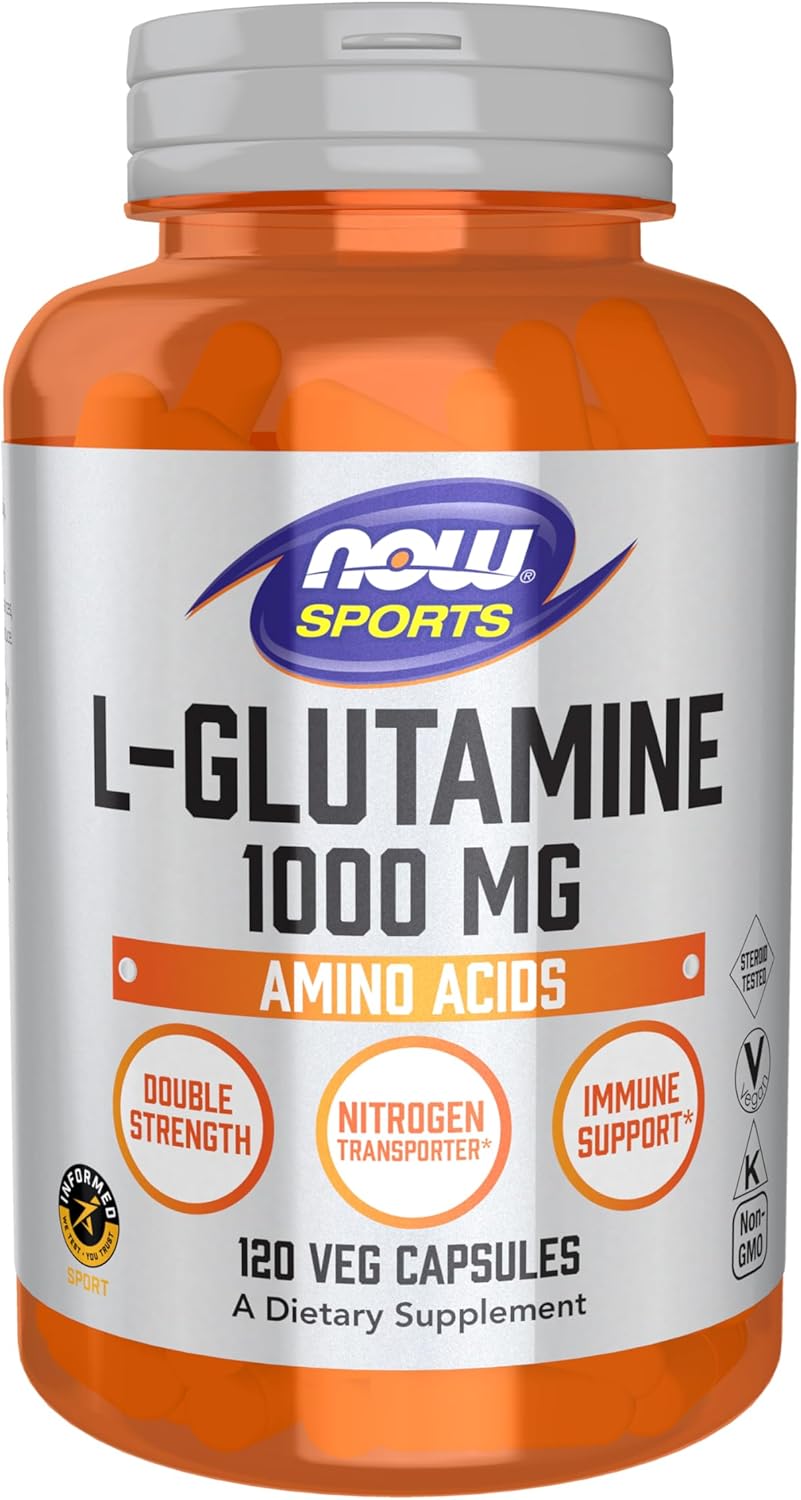
NOW Foods L-Glutamine 1000mg 120 Veg Capsules
Best for convenience: capsule form allows flexible dosing without measuring powder, backed by a trusted functional medicine brand.
- Reaching clinical doses (5–10g) requires swallowing 5–10 capsules daily, which some find inconvenient despite the convenience factor of the format itself
Affiliate link: If you buy through this link, we may earn a commission at no extra cost to you.
Buy NOW Foods L-Glutamine 1000mg 120 Veg Capsules
Momentous L-Glutamine Powder
Premium option with NSF Certified for Sport testing; best if you prioritize third-party batch verification but willing to pay 60% more per gram.
- NSF for Sport certification is athlete-focused; for general gut health use, the premium justification is weaker than for performance applications
Affiliate link: If you buy through this link, we may earn a commission at no extra cost to you.
Buy Momentous L-Glutamine PowderCompare supplements with the same checklist we use.
Get the anti-aging supplement cheat sheet with evidence prompts, safety checks, and label-quality questions before you buy.
Comparison Table
| Category | #1 NOW Foods L-Glutamine Pure Powder 1 lb NOW Foods | #2 NOW Foods L-Glutamine 1000mg 120 Veg Capsules NOW Foods | #3 Momentous L-Glutamine Powder Momentous |
|---|---|---|---|
| Score | 9.2/10 | 8.7/10 | 8.2/10 |
| Best For | Budget-conscious adults who want evidence-backed gut support without premium pricing or unnecessary certifications. Ideal if you're comfortable measuring powder and storing it properly. | Adults who prioritize convenience over cost and prefer not to measure powder. Good option for frequent travelers or those with dexterity challenges. High review count (9,400) indicates broad user satisfaction. | Users who value independent batch testing above all else and have the budget for premium pricing. Also suitable if you're using L-glutamine as part of a sports recovery protocol and need NSF certification for eligibility. |
| Pros |
|
|
|
| Cons |
|
|
|
What to Know About L-Glutamine for Gut Lining
L-glutamine is a conditionally essential amino acid that's become a fixture in digestive health conversations—especially among people recovering from antibiotic use or managing chronic digestive symptoms. The appeal is straightforward: your gut lining cells preferentially use glutamine as fuel, and research suggests adequate glutamine availability may support the structural integrity of the intestinal barrier and tight junctions that control what gets absorbed. But not all L-glutamine supplements are created equal. Quality varies wildly—from absorption rates to third-party testing to price-per-gram value. We've reviewed the most popular L-glutamine products to help you identify which one actually delivers what you're paying for, based on formulation science, real customer feedback, and clinical evidence backing. This guide is for adults dealing with post-antibiotic digestive issues, leaky gut symptoms, or general intestinal barrier support who want to make an informed choice without the marketing noise.
This content is for educational purposes only and is not medical advice. These statements have not been evaluated by the FDA. This product is not intended to diagnose, treat, cure, or prevent any disease.
Key Benefits of L-Glutamine for Gut Lining
May support intestinal tight junction integrity—the gatekeeping mechanism that controls nutrient absorption and prevents unwanted particles from crossing the gut barrier
Serves as preferred fuel for enterocytes (gut lining cells), potentially reducing mucosal atrophy in conditions where nutrient absorption is compromised
Generally well-tolerated with minimal side effects, making it a practical addition to digestive recovery protocols
How L-Glutamine Supports Gut Lining
Your intestinal lining is made up of a single layer of epithelial cells linked together by tight junction proteins—think of it as a selectively permeable gate. Glutamine is the primary energy source for enterocytes and plays a structural role in maintaining tight junction proteins like claudins and occludin. When glutamine availability drops (due to illness, antibiotic use, or metabolic stress), the gut barrier can become more permeable, theoretically allowing bacterial lipopolysaccharides (LPS) and other immunogenic particles to cross into circulation. Oral L-glutamine provides your intestinal cells with the raw material they need to maintain and repair these tight junctions. It also supports the growth of beneficial bacteria that produce short-chain fatty acids (SCFAs), which further protect barrier integrity. The research showing this works best in clinical settings (hospital nutrition support, IBD treatment) suggests the mechanism is legitimate—but in otherwise healthy people, the dosages and conditions differ substantially from published trials.
What to Look For When Buying L-Glutamine
Choosing an L-glutamine supplement means balancing three competing priorities: purity, convenience, and cost. Free-form L-glutamine (like all three products here) is superior to peptide-bound variants because your intestinal cells absorb and utilize it more efficiently—this matters because the clinical evidence is built on free-form dosing. All three products use free-form, so you're not losing efficacy by choosing the cheaper option. The real differentiator is testing and formulation. NOW Foods relies on GMP certification, which is legitimate but manufacturer-controlled; you're trusting NOW's internal QA. Momentous pays for NSF Certified for Sport testing, which is genuinely independent—a third party buys products off the shelf and verifies the label matches contents and checks for contaminants. That costs money, and it's reflected in the price. For gut health specifically (not athletic performance), NSF certification is nice-to-have, not essential—especially if you're buying from an established brand like NOW or NOW capsule option with decades of quality history. Form matters too. Powder is cheapest and most flexible for dosing adjustments, but requires storage discipline (cool, dry place, tight seal). Capsules cost more per gram but eliminate measuring and moisture risk. If you're taking 5–10g daily, capsules become tedious; if you're taking 2–3g or adjusting dose frequently, capsules shine. Final thought: price per gram is misleading if it means buying a product you won't use consistently. The best L-glutamine is the one you'll actually take daily. If you hate measuring powder, the NOW capsule option capsule is worth the premium for adherence. If cost is tight, NOW Foods delivers clinical-level purity at the best value.
Dosage Guidance
Always follow your healthcare provider's recommendations. Dosages vary by individual health status, age, and goals.
Common L-Glutamine Complaints (And How to Avoid Them)
Based on analysis of thousands of customer reviews across L-Glutamine products.
"I started L-glutamine and felt worse—more bloating and gas—so I stopped."
Temporary bloating is common when gut dysbiosis shifts or when glutamine feeds beneficial bacteria that increase gas production. This often resolves within 5–7 days as your microbiome stabilizes. Try starting at half the recommended dose (2.5g instead of 5g) and titrate upward more slowly. If bloating persists beyond 2 weeks or worsens, discontinue and consult your doctor—you may need a different intervention or medical evaluation.
"The powder is hard to mix—it clumps in water."
Free-form L-glutamine powder is inherently hygroscopic and does clump if exposed to humidity. Mix it in warm liquid (not hot, which can denature some amino acids), stir vigorously, or blend it. Store powder in an airtight container with a desiccant packet if your climate is humid. If this is frustrating, the NOW capsule option capsules eliminate the mixing hassle, though they cost more per serving.
"I've been taking L-glutamine for 3 months and haven't noticed any difference in my digestion."
L-glutamine may not be the limiting factor in your gut health. Dysbiosis (bacterial imbalance), unaddressed food sensitivities, chronic stress, or an undiagnosed condition like SIBO or hidden infection might be the real driver of your symptoms. Consider working with a functional medicine practitioner or gastroenterologist who can order stool analysis, breath testing, or endoscopy to identify the root cause. Supplementation works best when paired with targeted diet and lifestyle changes based on actual findings, not assumptions.
Safety & Interactions
- Pregnancy and breastfeeding: Consult your healthcare provider before taking this supplement during pregnancy or while nursing. The safety of supplemental doses beyond dietary intake has not been established in pregnant or lactating women.
- Blood thinners: If you take blood-thinning medications (e.g., warfarin, apixaban, rivaroxaban, clopidogrel, or high-dose aspirin), consult your healthcare provider BEFORE starting this supplement, as it may have additive antiplatelet or anticoagulant effects.
- Kidney disease: If you have chronic kidney disease (CKD) or any significant kidney impairment, consult your healthcare provider before taking this supplement. Some supplements can accumulate to dangerous levels when kidney function is reduced.
- Gout: Individuals with gout should consult their healthcare provider before starting this supplement. Certain supplements (e.g., collagen, fish oil, niacin) may affect uric acid levels or trigger flares in susceptible individuals.
- Fish allergy - capsule source: Some softgel capsules use fish-derived gelatin even when the active supplement is not fish-derived. If you have a confirmed fish or shellfish allergy, verify the capsule source on the label or check with the manufacturer. Vegan capsules (vegetable cellulose) are widely available alternatives.
- Beef / alpha-gal allergy - capsule source: Many softgel and two-piece capsules use bovine gelatin. If you have a confirmed beef allergy or alpha-gal syndrome (mammalian meat allergy), check capsule sources on the label. Vegan capsules (vegetable cellulose) and HPMC capsules are alternatives.
""From a registered dietitian perspective: L-glutamine is a reasonable, evidence-informed choice for post-antibiotic gut recovery or as part of a broader GI support protocol—the mechanism is solid and safety is strong. However, it's not a magic bullet for chronic digestive issues. Pair supplementation with dietary changes (adequate fiber, fermented foods, food sensitivity elimination if warranted), stress management, and sleep. If symptoms persist beyond 4–6 weeks of consistent supplementation, seek professional GI evaluation rather than adding more supplements."
— Angelique Nicole R. Villegas, RND, Registered Nutritionist Dietitian · PRC Philippines · License #0023950
Frequently Asked Questions
Citations & Research
This page references peer-reviewed research indexed on PubMed/NCBI. Citations are provided for transparency. Always consult a qualified healthcare professional before making any medical decisions.
- [1]van der Hulst RR, van Kreel BK, von Meyenfeldt MF et al. “Glutamine and the preservation of gut integrity.” Lancet (London, England), 1993. doi:10.1016/0140-6736(93)90939-ePMID 8098788 ↗
- [2]Morlion BJ, Stehle P, Wachtler P et al. “Total parenteral nutrition with glutamine dipeptide after major abdominal surgery: a randomized, double-blind, controlled study.” Annals of surgery, 1998. doi:10.1097/00000658-199802000-00022PMID 9488531 ↗
- [3]Ockenga J, Borchert K, Stüber E et al. “Glutamine-enriched total parenteral nutrition in patients with inflammatory bowel disease.” European journal of clinical nutrition, 2005. doi:10.1038/sj.ejcn.1602243PMID 16077744 ↗
- [4]Kim MH, Kim H. “The Roles of Glutamine in the Intestine and Its Implication in Intestinal Diseases.” International journal of molecular sciences, 2017. Review with clinical data. doi:10.3390/ijms18051051PMID 28498331 ↗
- [5]Benjamin J, Makharia G, Ahuja V, et al. “Glutamine and whey protein improve intestinal permeability and morphology in patients with Crohn's disease: a randomized controlled trial.” Digestive diseases and sciences, 2012. Randomized controlled trial. doi:10.1007/s10620-011-1947-9PMID 22038507 ↗
- [6]Vermeulen MA, van de Poll MC, Ligthart-Melis GC, et al. “Specific amino acids in the critically ill patient--exogenous glutamine/arginine: a common denominator?.” Critical care medicine, 2007. Clinical review and data synthesis. doi:10.1097/01.CCM.0000279201.14380.57PMID 17713411 ↗
Ready to Try L-Glutamine?
Our top pick for gut lining. Third-party tested, highly reviewed.
Affiliate link: If you buy through this link, we may earn a commission at no extra cost to you.
Shop #1 Pick — NOW Foods L-Glutamine Pure Powder 1 lbContinue exploring
- see all L Glutamine usesSupplement overview
- see all gut lining support supplements we coverGoal overview
- see L Glutamine evidence for gut healthSame supplement, different goal
- best Saccharomyces boulardii for gut healthEditor pick
- which form is right for youCompare options
Get the evidence-graded supplement cheat sheet.
Evidence prompts, safety checks, and label-quality questions before you buy — free, straight to your inbox.
No spam. Unsubscribe anytime.