
Best Glycine for Sleep in 2026: Top 3 Picks, Ranked by Evidence
Compare the best glycine supplements for sleep in 2026. Science-backed picks, RCT dosing, third-party tested, and honest pros/cons from our nutrition team.
Human-RCT / Mechanism-Well-Characterized

This content is for educational purposes only and is not medical advice. These statements have not been evaluated by the FDA. This product is not intended to diagnose, treat, cure, or prevent any disease. Always consult your healthcare provider before starting any supplement.
Best Glycine for Sleep in 2026
Ranked by quality, value, and clinical backing
Where available, we show when each product price was last checked so the list stays honest without overreacting to normal Amazon price movement.
NOW Foods Glycine 1000mg 100 Veg Capsules
- Swallowing 3 capsules per night is slightly more cumbersome than dissolving a teaspoon of powder in water
- No flavor benefit — those who find glycine's natural sweetness pleasant when dissolved will prefer powder
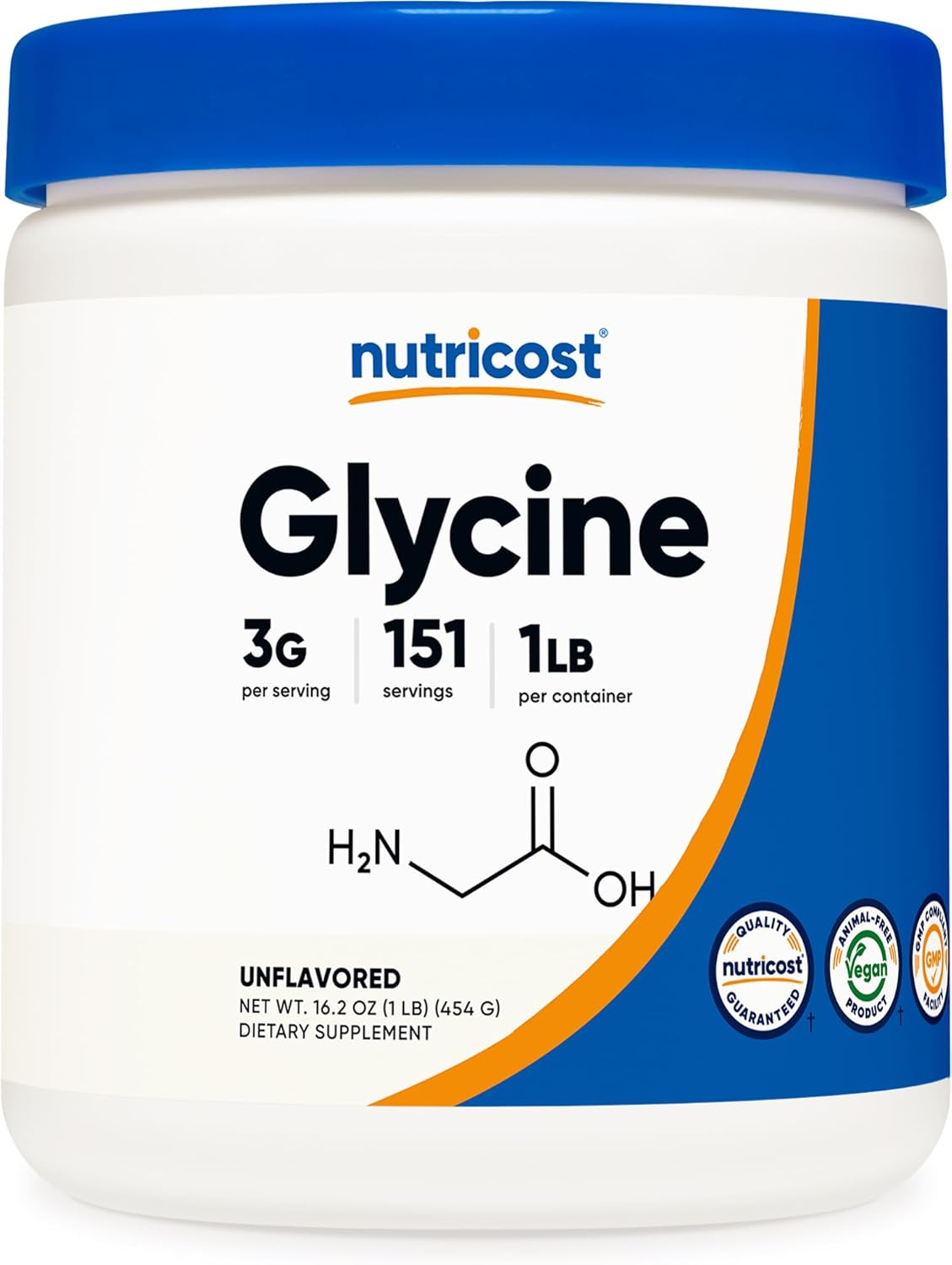
Nutricost Glycine Powder 1lb (454g)
Best for users who want flexible dosing, a pleasant pre-bed ritual, or the longest supply duration — glycine's natural sweetness makes this the most enjoyable way to take it.
- Requires a scale or measuring spoon for accuracy; a kitchen teaspoon is roughly 3g but not precise
- Loose powder is impractical for travel and can clump if the container isn't sealed properly between uses
Affiliate link: If you buy through this link, we may earn a commission at no extra cost to you.
Buy Nutricost Glycine Powder 1lb (454g)
Double Wood Supplements Glycine 1000mg 300 Capsules
- Smaller review base (1,800 reviews) compared to NOW Foods provides less social proof for first-time buyers
- No NSF Certified for Sport or USP verification — adequate for general consumers but not ideal for competitive athletes subject to testing
Affiliate link: If you buy through this link, we may earn a commission at no extra cost to you.
Buy Double Wood Supplements Glycine 1000mg 300 CapsulesCompare supplements with the same checklist we use.
Get the anti-aging supplement cheat sheet with evidence prompts, safety checks, and label-quality questions before you buy.
Comparison Table
| Category | #1 NOW Foods Glycine 1000mg 100 Veg Capsules NOW Foods | #2 Nutricost Glycine Powder 1lb (454g) Nutricost | #3 Double Wood Supplements Glycine 1000mg 300 Capsules Double Wood Supplements |
|---|---|---|---|
| Score | 9.4/10 | 9/10 | 8.7/10 |
| Best For | Users who want a pleasant pre-bed ritual, prefer bulk value, or are building a sleep stack where they want dosing flexibility | Budget-conscious buyers who've already confirmed glycine works for them and want the lowest long-term cost in capsule form | |
| Pros |
|
|
|
| Cons |
|
|
|
What to Know About Glycine for Sleep
Glycine doesn't get the same marketing budget as melatonin. That's a shame, because it's one of the few sleep supplements backed by human randomized controlled trials showing measurable improvements in sleep quality — without the next-morning grogginess that makes some people dread melatonin. It's a non-essential amino acid your body makes naturally, but supplementing with 3 grams before bed does something interesting: it appears to lower core body temperature and modulate activity in the hypothalamus, two mechanisms closely tied to sleep onset and slow-wave sleep. Researchers have found it reduces the time it takes to fall asleep and improves subjective sleep quality in people with self-reported sleep complaints — not by sedating you, but by nudging your physiology toward sleep. We've reviewed three glycine products specifically chosen for sleep use: one budget-friendly capsule option, one bulk powder, and one mid-range capsule. All three are third-party tested, use pure glycine, and are priced for long-term use. Here's what we found.
This content is for educational purposes only and is not medical advice. These statements have not been evaluated by the FDA. This product is not intended to diagnose, treat, cure, or prevent any disease.
Key Benefits of Glycine for Sleep
May reduce time to fall asleep by supporting core body temperature drop at sleep onset, based on human RCT evidence
Associated with improved next-day alertness and reduced fatigue without sedation or morning grogginess
Non-sedating mechanism distinguishes it from melatonin and antihistamine-based sleep aids, making it suitable for people sensitive to sedating compounds
How Glycine Supports Sleep
Glycine is both an inhibitory neurotransmitter and an amino acid involved in dozens of metabolic pathways. Its sleep-relevant mechanism appears to work through at least two routes. First, glycine acts on NMDA receptors in the suprachiasmatic nucleus — your brain's master circadian clock — in ways that may help synchronize sleep timing. Second, and arguably more important for sleep onset, glycine appears to cause peripheral vasodilation, which accelerates the natural drop in core body temperature that signals to your brain that it's time to sleep. Your core body temperature needs to fall roughly 1–2°F for sleep to initiate and deepen properly; glycine seems to facilitate that process. Unlike GABA-ergic supplements (such as valerian or magnesium in high doses), glycine doesn't produce sedation by broadly inhibiting neural activity. That's why users consistently report feeling rested rather than groggy the next morning. It's a mechanistically clean intervention — you're not overriding your nervous system, you're giving it a physiological cue it already uses. This also makes glycine a logical pairing with other sleep stack components: L-theanine works via alpha-wave promotion and mild GABA modulation, magnesium supports muscle relaxation and GABA receptor sensitivity, and melatonin directly signals circadian darkness. Glycine's thermoregulatory pathway doesn't conflict with any of these.
What to Look For When Buying Glycine
The single most important purchasing decision with glycine isn't brand — it's form. Capsules and powder deliver identical glycine molecules; the difference is entirely practical. Capsules win on convenience and travel friendliness. Powder wins on flexibility, cost-per-gram at scale, and the fact that glycine tastes mildly sweet, making a pre-bed 'sleep drink' genuinely enjoyable rather than a chore. If you're new to glycine, we'd suggest starting with capsules to keep the routine simple. Dosage per serving is the second variable to check. Several glycine products sell 500mg capsules — perfectly fine, but you'd need to swallow six capsules to hit the 3g RCT dose. All three products on this list use 1,000mg capsules or a ~3g powder serving, which we consider the minimum bar for a sleep-focused glycine product worth recommending. Third-party testing matters more than label claims. The supplement industry is largely self-regulated, meaning a brand can print 'pure glycine' on a label without independent verification. Every product here has undergone third-party testing and GMP-certified manufacturing — that combination is the baseline we require. NSF Certified for Sport adds another layer of verification useful for athletes, but for general consumers, GMP plus third-party testing is sufficient. Finally, consider your use case timeline. If you're experimenting with glycine for the first time, NOW Foods' 100-capsule bottle (about 33 nights at 3g) is the right starting point — enough to assess your response without overcommitting. If you already know glycine works for you and want the lowest possible long-term cost, Double Wood's 300-capsule bottle or Nutricost's bulk powder are the better economics. One honest note: not everyone responds to glycine in the same way. Some people notice effects the first night; others report gradual improvement over one to two weeks. Give it at least two weeks before concluding it isn't working.
Dosage Guidance
Always follow your healthcare provider's recommendations. Dosages vary by individual health status, age, and goals.
Common Glycine Complaints (And How to Avoid Them)
Based on analysis of thousands of customer reviews across Glycine products.
"I took glycine for a week and didn't notice any difference"
Give it at least two full weeks at 3g before drawing conclusions — response timing varies considerably between individuals. Also verify you're taking it 30–60 minutes before your target sleep time, not right at bedtime. If there's still no response after two weeks, glycine may simply not be the right intervention for your specific sleep pattern, and L-theanine or magnesium glycinate may be worth exploring.
"Three capsules before bed feels like a lot of pills"
This is a legitimate inconvenience. If swallowing three capsules is a barrier, the Nutricost powder is a genuinely pleasant alternative — glycine's natural sweetness means a teaspoon dissolved in warm water tastes fine and may actually become a relaxing pre-bed ritual rather than a pill-taking task.
"I'm not sure if the powder is accurately dosed with a teaspoon"
A standard level kitchen teaspoon of glycine powder is approximately 2.8–3.2g, which is close enough to the 3g target for most users. For maximum accuracy, a small digital kitchen scale (often under $10) is the cleanest solution and removes any guesswork from your nightly dose.
Safety & Interactions
- Pregnancy and breastfeeding: Consult your healthcare provider before taking this supplement during pregnancy or while nursing. The safety of supplemental doses beyond dietary intake has not been established in pregnant or lactating women.
- Blood thinners: If you take blood-thinning medications (e.g., warfarin, apixaban, rivaroxaban, clopidogrel, or high-dose aspirin), consult your healthcare provider BEFORE starting this supplement, as it may have additive antiplatelet or anticoagulant effects.
- Kidney disease: If you have chronic kidney disease (CKD) or any significant kidney impairment, consult your healthcare provider before taking this supplement. Some supplements can accumulate to dangerous levels when kidney function is reduced.
- Gout: Individuals with gout should consult their healthcare provider before starting this supplement. Certain supplements (e.g., collagen, fish oil, niacin) may affect uric acid levels or trigger flares in susceptible individuals.
- Fish allergy - capsule source: Some softgel capsules use fish-derived gelatin even when the active supplement is not fish-derived. If you have a confirmed fish or shellfish allergy, verify the capsule source on the label or check with the manufacturer. Vegan capsules (vegetable cellulose) are widely available alternatives.
- Beef / alpha-gal allergy - capsule source: Many softgel and two-piece capsules use bovine gelatin. If you have a confirmed beef allergy or alpha-gal syndrome (mammalian meat allergy), check capsule sources on the label. Vegan capsules (vegetable cellulose) and HPMC capsules are alternatives.
- Not a replacement for prescription sleep medications: This supplement is a supportive option for people with low magnesium status, not a treatment for clinical insomnia disorders. Anyone with chronic sleep issues should consult a doctor.
- Important: This supplement is not a replacement for prescription medications. It is supportive for individuals with low baseline status, not a treatment for diagnosed conditions (anxiety disorders, insomnia, hypertension, osteoporosis, etc.). Do not stop or reduce any prescription without consulting your doctor.
""Glycine is one of the more mechanistically credible sleep supplements I recommend clinicians consider for patients who can't tolerate sedating options — the thermoregulatory data is genuinely interesting and the safety profile at 3g is very reassuring. That said, it's not a substitute for evaluating sleep hygiene, ruling out sleep apnea, or addressing CBT-I for chronic insomnia."
— Angelique Nicole R. Villegas, RND, Registered Nutritionist Dietitian · PRC Philippines · License #0023950
Frequently Asked Questions
Citations & Research
This page references peer-reviewed research indexed on PubMed/NCBI. Citations are provided for transparency. Always consult a qualified healthcare professional before making any medical decisions.
- [2]Soh J, Raventhiran S, Lee JH et al. “The effect of glycine administration on the characteristics of physiological systems in human adults: A systematic review.” GeroScience, 2024. doi:10.1007/s11357-023-00970-8PMID 37851316 ↗
- [3]Thomas C, Kingshott RN, Allott KM et al. “Collagen peptide supplementation before bedtime reduces sleep fragmentation and improves cognitive function in physically active males with sleep complaints.” European journal of nutrition, 2024. doi:10.1007/s00394-023-03267-wPMID 37874350 ↗
- [1]Langan-Evans C, Hearris MA, Gallagher C et al. “Nutritional Modulation of Sleep Latency, Duration, and Efficiency: A Randomized, Repeated-Measures, Double-Blind Deception Study.” Medicine and science in sports and exercise, 2023. doi:10.1249/MSS.0000000000003040PMID 36094342 ↗
Ready to Try Glycine?
Our top pick for sleep. Third-party tested, highly reviewed.
Affiliate link: If you buy through this link, we may earn a commission at no extra cost to you.
Shop #1 Pick — NOW Foods Glycine 1000mg 100 Veg CapsulesContinue exploring
- how we evaluate GlycineSupplement overview
- what we recommend for sleepGoal overview
- 5 HTP reviewed for sleepAlternative supplement
- where Ashwagandha fits for sleepAlternative supplement
- Glycine reviewed for sleep qualitySame supplement, different goal
- evidence notes on Magnesium for sleepEditor pick
- how we rate L Theanine for sleepEditor pick
- we tested supplements against food sourcesCompare options
Get the evidence-graded supplement cheat sheet.
Evidence prompts, safety checks, and label-quality questions before you buy — free, straight to your inbox.
No spam. Unsubscribe anytime.