
Best Elderberry Supplements for Immune Support in 2026
Elderberry reduced flu duration by 4 days in the Zakay-Rones RCT. We break down which products match the clinical trial formula — and which are diluted syrups.

This content is for educational purposes only and is not medical advice. These statements have not been evaluated by the FDA. This product is not intended to diagnose, treat, cure, or prevent any disease. Always consult your healthcare provider before starting any supplement.
Best Elderberry for Immune Support in 2026
Ranked by quality, value, and clinical backing
Where available, we show when each product price was last checked so the list stays honest without overreacting to normal Amazon price movement.
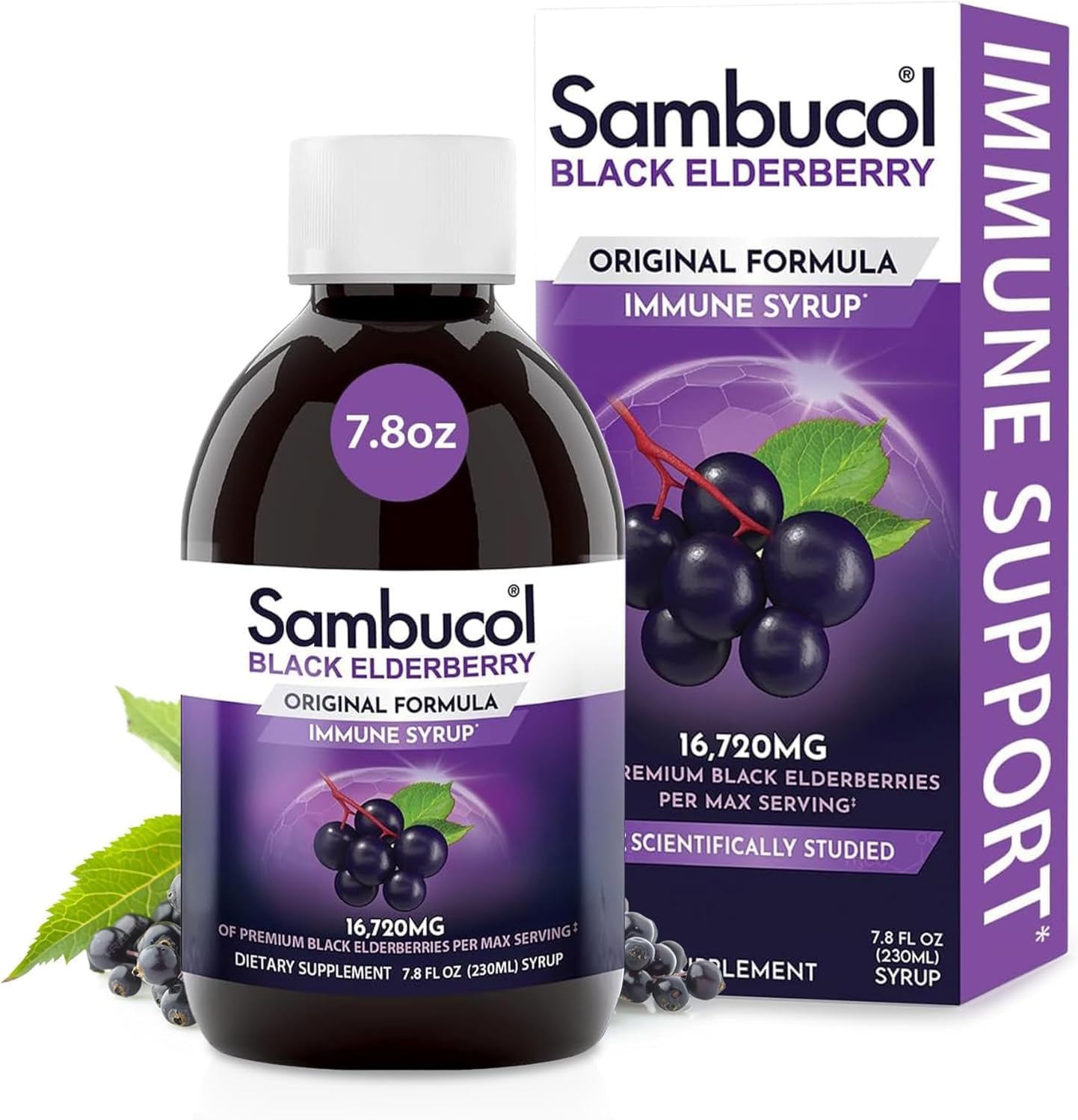
Sambucol Original Black Elderberry Syrup
The clinical trial formula — Sambucol is the product used in the Zakay-Rones 2004 RCT and the most consistently studied elderberry preparation in published literature. If your goal is to replicate the evidence base as closely as possible, Sambucol syrup is the default choice. The syrup form allows flexible dosing (the trial used 15ml four times daily during active illness) and is rapidly absorbed.
- Contains glucose syrup (added sugar) — not ideal for daily use in people managing blood sugar
- Less convenient than capsules for travel or consistent daily dosing
- Higher cost per serving than capsule alternatives for long-term daily maintenance
Affiliate link: If you buy through this link, we may earn a commission at no extra cost to you.
Buy Sambucol Original Black Elderberry Syrup
Gaia Herbs Black Elderberry Capsules
The best elderberry capsule for organic-focused buyers. Gaia's USDA Organic certification, B Corp status, and full supply chain traceability represent the highest quality credentials of any elderberry capsule on this list. The Meet Your Herbs platform lets you trace each batch to the specific farm and harvest. For daily maintenance use, this is a compelling choice.
- Specific anthocyanin or polyphenol percentage not published on label — standardization less explicit than NOW Foods
- Higher cost per serving than budget options
- Capsule form may be slower-onset than syrup for acute illness
Affiliate link: If you buy through this link, we may earn a commission at no extra cost to you.
Buy Gaia Herbs Black Elderberry CapsulesNOW Foods Elderberry 500mg Capsules
The best value for a standardized elderberry capsule. NOW Foods publishes a specific polyphenol percentage (17%), making this one of the most transparent capsule products in the category.
- 17% polyphenol standardization is not directly comparable to Sambucol's anthocyanin content — different quality markers make direct comparison difficult
- Fewer reviews (4,800) than Gaia or Sambucol
- NOW Foods' elderberry does not have its own independent RCT — evidence association relies on the general elderberry evidence base
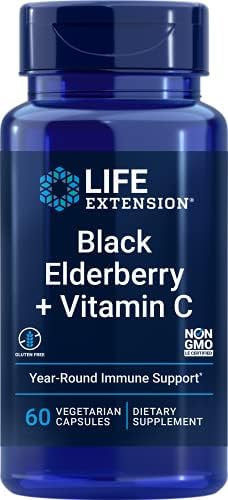
Life Extension Elderberry 100mg Extract
A low-cost daily maintenance option from a reputable brand. Life Extension's elderberry uses a concentrated extract (100mg is likely equivalent to several hundred mg of raw elderberry), and the brand's commitment to standardized, research-grade ingredients is well established. The lower review count reflects less consumer familiarity vs Sambucol, not quality concerns.
- 100mg extract dose requires knowing the concentration ratio to compare with other products — not clearly published
- Specific anthocyanin content not stated on product page
- Only 1,800 reviews — less consumer feedback than top-ranked products
Affiliate link: If you buy through this link, we may earn a commission at no extra cost to you.
Buy Life Extension Elderberry 100mg ExtractCompare supplements with the same checklist we use.
Get the anti-aging supplement cheat sheet with evidence prompts, safety checks, and label-quality questions before you buy.
Comparison Table
| Category | #1 Sambucol Original Black Elderberry Syrup Sambucol | #2 Gaia Herbs Black Elderberry Capsules Gaia Herbs | #3 NOW Foods Elderberry 500mg Capsules NOW Foods | #4 Life Extension Elderberry 100mg Extract Life Extension |
|---|---|---|---|---|
| Score | 9.2/10 | 8.8/10 | 8.4/10 | 7.9/10 |
| Best For | Adults who want the most clinically validated elderberry formula for use at first sign of flu symptoms or during active outbreak exposure | Organic-focused adults who want the highest sourcing standards for daily immune maintenance | Value-conscious adults who want daily standardized elderberry for seasonal maintenance without spending a premium | Adults already familiar with Life Extension products who want the lowest-cost standardized elderberry for year-round maintenance |
| Pros |
|
|
|
|
| Cons |
|
|
|
|
What to Know About Elderberry for Immune Support
Elderberry (Sambucus nigra) is one of the most evidence-supported botanicals for immune support — and among the few supplements with a rigorous, placebo-controlled clinical trial conducted during an actual influenza outbreak. The landmark Zakay-Rones 2004 RCT (Journal of International Medical Research, PMID 15080016) randomized 60 patients in Israel during a 1999-2000 influenza B outbreak to Sambucol elderberry extract or placebo. Patients who received elderberry extract recovered from influenza 4 days faster than the placebo group (mean 3.1 days vs 7.1 days). Influenza severity scores were also significantly lower in the elderberry group. This was not a supplement industry-funded convenience study — it was conducted amid an active outbreak with PCR-confirmed influenza diagnosis. The mechanism is unusually direct for a botanical supplement: elderberry anthocyanins — primarily cyanidin-3-sambubioside and cyanidin-3-glucoside — have been shown to inhibit neuraminidase, the enzyme on the surface of influenza viruses that enables them to penetrate respiratory epithelial cells and replicate. This is the same enzyme targeted by prescription antivirals like oseltamivir (Tamiflu). Elderberry does not replace Tamiflu — its effect size is smaller and its evidence base is more limited — but the shared mechanism means there is genuine pharmacological plausibility behind the clinical findings. For adults 45 and older, this evidence is particularly relevant. Immune aging (immunosenescence) progressively reduces the innate immune system's ability to mount a rapid first-line response to viral pathogens. Elderberry's direct antiviral mechanism — inhibiting neuraminidase rather than relying on a robust immune response — makes it a more rational intervention for this demographic than many general 'immune tonic' supplements.
This content is for educational purposes only and is not medical advice. These statements have not been evaluated by the FDA. This product is not intended to diagnose, treat, cure, or prevent any disease.
Key Benefits of Elderberry for Immune Support
In the Zakay-Rones 2004 RCT (n=60, active influenza outbreak), Sambucol elderberry extract reduced flu duration by 4 days and symptom severity significantly vs placebo (p<0.001) — the most rigorous elderberry trial conducted in an actual outbreak setting
Elderberry anthocyanins inhibit neuraminidase — the viral enzyme that enables influenza to penetrate respiratory cells — providing a direct antiviral mechanism supported by in vitro and clinical evidence
A 2016 RCT in air travelers (n=312) found elderberry capsules reduced cold duration by 2 days and lowered severity scores, suggesting the benefit extends beyond syrups to standardized capsule forms
How Elderberry Supports Immune Support
Elderberry's immune-supporting effects operate through two distinct pathways that work together during a viral infection. **Neuraminidase inhibition (direct antiviral).** Influenza viruses and some other respiratory viruses express neuraminidase on their surface. Neuraminidase cleaves sialic acid residues on respiratory epithelial cells, enabling the virus to penetrate and replicate inside cells. Elderberry anthocyanins — particularly cyanidin-3-sambubioside and cyanidin-3-glucoside — bind to viral hemagglutinin and neuraminidase, blocking this cell-entry mechanism. The result: viruses remain in the extracellular space rather than entering and replicating inside cells. This is the same mechanism targeted by oseltamivir (Tamiflu), though with a smaller clinical effect size. The direct antiviral action does not require a strong immune response to work — which is why it is particularly relevant for older adults with weaker innate immunity. **Cytokine modulation (immune amplification).** Elderberry extracts have been shown to stimulate the production of pro-inflammatory cytokines — including IL-1β, IL-6, IL-8, and TNF-α — in monocytes and macrophages. This amplifies the innate immune response during early viral infection. However, this cytokine-stimulating property also raises a theoretical concern: in severe infections with excessive cytokine activity (like COVID-19 cytokine storms), additional cytokine stimulation might be counterproductive. This is why elderberry is most appropriate for mild-to-moderate upper respiratory viral illness in otherwise healthy adults — not for severe or complicated infections. **Anthocyanin bioavailability.** Not all elderberry products deliver equivalent anthocyanin content. The Zakay-Rones RCT used Sambucol, which is standardized to a specific elderberry extract concentration. Many commercial elderberry products — particularly budget syrups — are diluted to a fraction of this concentration to reduce cost. A consumer taking an unstandardized elderberry product cannot know whether they are receiving the dose that produced clinical benefits in the trial. The standardization gap between products is one of the most clinically important quality distinctions in the elderberry market.
General immune support and acute illness prevention are mechanistically distinct uses: elderberry for cold and flu targets cytokine-mediated viral clearance at onset, while the broader immune-support role relates to baseline NK cell activity and immunoglobulin production.
The closest evidence-matched alternative is echinacea for immune support, which activates innate immunity through distinct toll-like receptor pathways and has an independent RCT base across cold-prevention and infection duration outcomes.
What to Look For When Buying Elderberry
Choosing an elderberry supplement primarily comes down to two decisions: form (syrup vs capsule) and standardization (does the product tell you what active compounds it contains). **Syrup vs capsules.** The clinical trial evidence for elderberry used Sambucol syrup. Syrup allows flexible acute dosing (the 15ml four times daily protocol used in the Zakay-Rones trial) and may have faster absorption than capsules for acute illness. For daily maintenance use, capsules are more convenient and have no added sugar. Both forms are appropriate if the active compound content is standardized. **Standardization is the key quality marker.** Elderberry products range from Sambucol (standardized, clinical-trial-tested) to generic elderberry powder in a capsule with no stated active compound content. The minimum quality bar is a stated polyphenol or anthocyanin percentage. Products without any standardization data — which includes many low-cost syrups and gummies — cannot be reliably evaluated for potency. **Gummies: generally avoid.** Elderberry gummies are the fastest-growing segment of the elderberry market, but they typically contain a fraction of the standardized extract found in syrups or capsules. Many contain more added sugar than active elderberry compound, and there is no clinical trial evidence for elderberry gummies specifically. For genuine antiviral support, use the forms with evidence: syrup or standardized capsules with stated polyphenol or anthocyanin content. **Timing matters.** The Zakay-Rones RCT showed the greatest benefit when elderberry was started within 48 hours of symptom onset. For prophylactic use (daily during cold and flu season), the King et al. air traveler trial used 300mg capsules for 10 days before and after travel. The evidence for daily year-round use is weaker — elderberry is better supported as a seasonal or exposure-triggered intervention than as a 365-day supplement.
Dosage Guidance
Always follow your healthcare provider's recommendations. Dosages vary by individual health status, age, and goals.
Common Elderberry Complaints (And How to Avoid Them)
Based on analysis of thousands of customer reviews across Elderberry products.
""I took elderberry during my cold but it didn't seem to shorten it at all""
Timing is the most important factor. The Zakay-Rones RCT showed the greatest benefit when elderberry was started within 48 hours of symptom onset. If you start 3-4 days into a cold, the neuraminidase-inhibiting mechanism has limited impact because viral replication is already well established. Additionally, if you used an unstandardized product (a cheap syrup with no stated anthocyanin content), the active compound dose may have been insufficient. Switch to Sambucol or a standardized capsule, and start it at the very first sign of symptoms — scratchy throat, mild fatigue, or exposure to a sick person.
""The elderberry gummies I bought taste great — are they as good as syrup?""
Almost certainly not. Elderberry gummies are formulated primarily as a palatable consumer product — the elderberry content is typically far lower than in standardized syrups or capsules, and most of the caloric content is sugar. The clinical evidence is entirely based on standardized Sambucol syrup or standardized extract capsules. There is no clinical trial evidence for elderberry gummies. For genuine antiviral support, use the forms with evidence: syrup (Sambucol) or standardized capsules with stated polyphenol or anthocyanin content.
""I have an autoimmune condition — is elderberry safe for me?""
This is a legitimate concern. Elderberry stimulates pro-inflammatory cytokine production — specifically IL-1β, IL-6, IL-8, and TNF-α. For people with autoimmune conditions (rheumatoid arthritis, lupus, multiple sclerosis, inflammatory bowel disease), this immune stimulation could theoretically exacerbate disease activity. The evidence for harm is theoretical rather than documented in clinical trials, but the mechanism is real. We recommend consulting your rheumatologist, neurologist, or gastroenterologist before using elderberry. In many cases, they will advise avoidance or restricted use during autoimmune flares.
Safety & Interactions
- Pregnancy and breastfeeding: Consult your healthcare provider before taking this supplement during pregnancy or while nursing. The safety of supplemental doses beyond dietary intake has not been established in pregnant or lactating women.
- Blood thinners: If you take blood-thinning medications (e.g., warfarin, apixaban, rivaroxaban, clopidogrel, or high-dose aspirin), consult your healthcare provider BEFORE starting this supplement, as it may have additive antiplatelet or anticoagulant effects.
- Kidney disease: If you have chronic kidney disease (CKD) or any significant kidney impairment, consult your healthcare provider before taking this supplement. Some supplements can accumulate to dangerous levels when kidney function is reduced.
- Gout: Individuals with gout should consult their healthcare provider before starting this supplement. Certain supplements (e.g., collagen, fish oil, niacin) may affect uric acid levels or trigger flares in susceptible individuals.
""Elderberry is the botanical immune supplement with arguably the cleanest clinical evidence profile — a real RCT conducted during a real outbreak, with a plausible mechanism that has been mechanistically validated in subsequent research. The key distinction for our demographic (adults 45+) is that elderberry's neuraminidase-inhibition mechanism works regardless of immune system vigor — it is not dependent on a robust immune response to be effective. This makes it more theoretically suitable for immunosenescent adults than supplements that work by stimulating an already-declining immune system. The product quality gap between Sambucol and cheap generic elderberry syrups is substantial and clinically meaningful — standardization to anthocyanin content is the non-negotiable quality marker."
Frequently Asked Questions
Citations & Research
This page references peer-reviewed research indexed on PubMed/NCBI. Citations are provided for transparency. Always consult a qualified healthcare professional before making any medical decisions.
- [1]Zakay-Rones Z, Thom E, Wollan T, Wadstein J. Randomized study of the efficacy and safety of oral elderberry extract in the treatment of influenza A and B virus infections. J Int Med Res. 2004;32(2):132-140.PMID 15080016 ↗
- [2]Hawkins J, Baker C, Cherry L, Dunne E. Black elderberry (Sambucus nigra) supplementation effectively treats upper respiratory symptoms: A meta-analysis of randomized, controlled clinical trials. Complement Ther Med. 2019;42:361-365.PMID 30670267 ↗
- [3]Barak V, Halperin T, Kalickman I. The effect of Sambucol, a black elderberry-based, natural product, on the production of human cytokines: I. Inflammatory cytokines. European cytokine network. 2001;12(2):290-6.PMID 11399518 ↗
- [4]Tiralongo E, Wee SS, Lea RA. “Elderberry Supplementation Reduces Cold Duration and Symptoms in Air-Travellers: A Randomized, Double-Blind Placebo-Controlled Clinical Trial.” Nutrients, 2016. n=312. doi:10.3390/nu8040182PMID 27023596 ↗
Ready to Try Elderberry?
Our top pick for immune support. Third-party tested, highly reviewed.
Affiliate link: If you buy through this link, we may earn a commission at no extra cost to you.
Shop #1 Pick — Sambucol Original Black Elderberry SyrupContinue exploring
- Elderberry supplement guideSupplement overview
- what we recommend for immune supportGoal overview
- clinical notes on Andrographis and immune supportAlternative supplement
- the Arabinogalactan page for immune supportAlternative supplement
- Elderberry and cold & flu immune support: what to knowSame supplement, different goal
- Echinacea evidence for immune supportEditor pick
- Colostrum — an option to consider for immune supportEditor pick
- we tested supplements against food sourcesCompare options
Get the evidence-graded supplement cheat sheet.
Evidence prompts, safety checks, and label-quality questions before you buy — free, straight to your inbox.
No spam. Unsubscribe anytime.