
Best Choline Supplements for Cognitive Aging (2026): Evidence-Based Rankings
Compare the best choline supplements for cognitive aging in 2026. CDP-choline vs alpha-GPC vs bitartrate — evidence-based rankings for adults 40–70.

This content is for educational purposes only and is not medical advice. These statements have not been evaluated by the FDA. This product is not intended to diagnose, treat, cure, or prevent any disease. Always consult your healthcare provider before starting any supplement.
Best Choline for Cognitive Aging in 2026
Ranked by quality, value, and clinical backing
Where available, we show when each product price was last checked so the list stays honest without overreacting to normal Amazon price movement.

Jarrow Formulas Citicoline CDP Choline 250mg
- CDP-choline is only 18% choline by molecular weight, so raw choline delivery per capsule is lower than alpha-GPC at equivalent doses
- No NSF or USP third-party certification — though Jarrow has a long track record, the absence of elite-tier certification is worth noting
Affiliate link: If you buy through this link, we may earn a commission at no extra cost to you.
Buy Jarrow Formulas Citicoline CDP Choline 250mg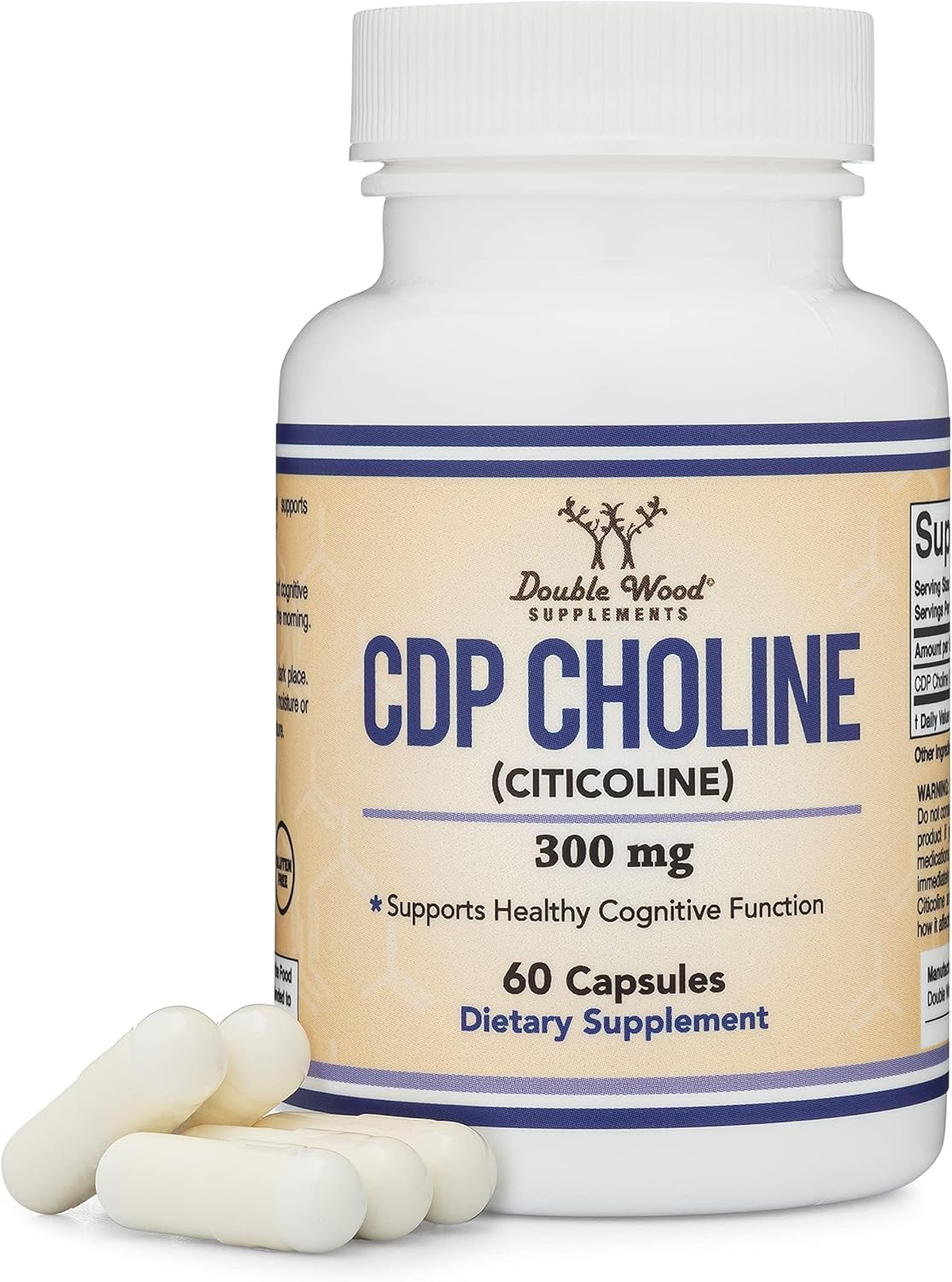
Double Wood Supplements CDP Choline 300mg 60 Capsules
A solid CDP-choline option with a slightly higher per-capsule dose than Jarrow, though at a marginally higher cost from a less-established brand.
- Double Wood is a newer brand without the decades-long research reputation of Jarrow or NOW — a real consideration for long-term supplement sourcing
Affiliate link: If you buy through this link, we may earn a commission at no extra cost to you.
Buy Double Wood Supplements CDP Choline 300mg 60 Capsules
Solgar Phosphatidylcholine 100 Softgels
A well-made phosphatidylcholine supplement best suited for those prioritizing cell membrane health alongside choline intake, though it's less efficient for direct acetylcholine synthesis than CDP-choline.
- Requires 3 softgels per serving — a practical inconvenience that likely affects adherence over time
- Phosphatidylcholine must be enzymatically cleaved before free choline is available for acetylcholine synthesis — less direct and less efficient than CDP-choline for acute cholinergic support; also unsuitable for anyone with soy sensitivity
Affiliate link: If you buy through this link, we may earn a commission at no extra cost to you.
Buy Solgar Phosphatidylcholine 100 Softgels
NOW Foods Choline and Inositol 500mg 100 Capsules
The most affordable option on the list, but choline bitartrate's limited blood-brain barrier penetration makes it the weakest choice for central cognitive support specifically.
- Choline bitartrate has significantly lower blood-brain barrier penetration compared to CDP-choline or alpha-GPC — the cognitive aging evidence base was built predominantly on higher-bioavailability forms
- The cognitive benefits documented in clinical trials (Nakazaki 2021, Spiers 1996) used citicoline, not choline bitartrate — direct extrapolation is not supported
Affiliate link: If you buy through this link, we may earn a commission at no extra cost to you.
Buy NOW Foods Choline and Inositol 500mg 100 CapsulesCompare supplements with the same checklist we use.
Get the anti-aging supplement cheat sheet with evidence prompts, safety checks, and label-quality questions before you buy.
Comparison Table
| Category | #1 Jarrow Formulas Citicoline CDP Choline 250mg Jarrow Formulas | #2 Double Wood Supplements CDP Choline 300mg 60 Capsules Double Wood Supplements | #3 Solgar Phosphatidylcholine 100 Softgels Solgar | #4 NOW Foods Choline and Inositol 500mg 100 Capsules NOW Foods |
|---|---|---|---|---|
| Score | 9.2/10 | 8.4/10 | 7.6/10 | 6.8/10 |
| Best For | Adults 40–70 seeking evidence-backed cognitive support at an accessible price point, especially those new to choline supplementation | Experienced supplement users who prefer a slightly higher per-capsule dose and are comfortable with a newer-brand CDP-choline product | Adults who want to support both cholinergic function and cell membrane health, particularly those who tolerate soy and prefer a fat-soluble choline form | Budget-conscious individuals primarily looking to address dietary choline insufficiency rather than optimize brain-specific choline delivery |
| Pros |
|
|
|
|
| Cons |
|
|
|
|
What to Know About Choline for Cognitive Aging
Most Americans don't get enough choline. The NIH estimates that over 90% of adults fall short of the adequate intake — and that gap matters more as we age. Choline is a precursor to acetylcholine, the neurotransmitter most closely tied to memory, attention, and learning. As cholinergic signaling naturally declines with age, ensuring adequate choline intake becomes one of the more well-supported nutritional strategies for cognitive health. But not all choline supplements are created equal. The form you take determines how much actually reaches your brain. CDP-choline (citicoline) and alpha-GPC cross the blood-brain barrier efficiently. Phosphatidylcholine supports cell membrane integrity. Choline bitartrate, while affordable, has significantly lower central bioavailability. Knowing the hierarchy matters — especially if cognitive support is your primary goal. This guide ranks four choline products specifically for adults in the 40–70 age range who are thinking proactively about cognitive aging. We've weighted clinical evidence heavily, prioritized higher-bioavailability forms, and kept an honest eye on price, quality certifications, and real-world tolerability. What you won't find here is hype.
This content is for educational purposes only and is not medical advice. These statements have not been evaluated by the FDA. This product is not intended to diagnose, treat, cure, or prevent any disease.
Key Benefits of Choline for Cognitive Aging
May support verbal and visual memory performance in adults 40–70, based on both dietary cohort data and RCT evidence with citicoline
Provides foundational support for acetylcholine synthesis — the neurotransmitter central to memory encoding and attentional function
CDP-choline's dual pathway delivers both choline and cytidine (which converts to uridine), supporting neuronal membrane phospholipid synthesis alongside cholinergic function
How Choline Supports Cognitive Aging
Choline's primary cognitive role runs through acetylcholine synthesis. In the brain, choline is taken up by neurons and converted — via choline acetyltransferase — into acetylcholine, the neurotransmitter that underpins memory consolidation, attention, and learning. Cholinergic neurons in the basal forebrain are among the first to show age-related decline, which is why maintaining adequate choline availability becomes increasingly relevant past age 40. CDP-choline (citicoline) works through a more layered mechanism than simple choline salts. It contributes choline for acetylcholine synthesis, but the cytidine component is converted to uridine in the bloodstream, which then crosses the blood-brain barrier and participates in the synthesis of phosphatidylcholine — a critical component of neuronal cell membranes. This dual-pathway activity is part of why citicoline outperforms choline bitartrate in head-to-head bioavailability and clinical outcomes. Phosphatidylcholine, meanwhile, supports membrane structural integrity directly but requires enzymatic cleavage before choline becomes available for neurotransmitter synthesis — making it less efficient for acute cholinergic support, though potentially useful for long-term membrane health.
What to Look For When Buying Choline
The single most important decision in choosing a choline supplement for cognitive aging is form. Not brand, not price — form. CDP-choline (citicoline) and alpha-GPC are the two forms with established blood-brain barrier penetration and direct clinical evidence in cognitive aging populations. Of those two, citicoline has the larger and more recent RCT evidence base. Alpha-GPC — not represented in our current product rankings but worth knowing — delivers roughly 40% choline by weight and has its own legitimate evidence base, particularly in European clinical research. If you encounter an alpha-GPC product, it's a credible alternative to CDP-choline, not an inferior one. Phosphatidylcholine occupies a different niche. It's the form most relevant for cell membrane support and is found naturally in egg yolks and soy lecithin. For someone whose primary interest is overall choline status and cellular membrane health — not targeted brain delivery — phosphatidylcholine is a reasonable choice. It just shouldn't be selected over CDP-choline if your explicit goal is cholinergic support for cognitive aging. Choline bitartrate, meanwhile, is best understood as a choline repletion tool. It can help fill dietary gaps, and at $0.11 a serving it's accessible — but the cognitive aging clinical literature doesn't support it as a primary strategy. Dosing matters too. The Nakazaki 2021 trial used 500mg of citicoline daily. That's two capsules of the Jarrow 250mg product or two capsules of most standard CDP-choline offerings. One capsule of a 300mg product puts you slightly below that threshold but still within the range used in earlier trials. If you're comparing products, check whether the listed dose is per capsule or per serving — that distinction trips up a surprising number of buyers. Finally, consider what else is in the capsule. Single-ingredient products make it easier to attribute any effects — or side effects — to choline specifically. Blended formulas can make sense for broader cognitive support stacks, but for the purpose of this comparison, we've favored formulation simplicity. Always check for allergens: soy is common in phosphatidylcholine products, and some capsule shells use gelatin.
Dosage Guidance
Always follow your healthcare provider's recommendations. Dosages vary by individual health status, age, and goals.
Common Choline Complaints (And How to Avoid Them)
Based on analysis of thousands of customer reviews across Choline products.
"Choline gives me a fishy smell"
This is most common with choline bitartrate, which produces more trimethylamine as a metabolic byproduct. CDP-choline (citicoline) and phosphatidylcholine forms are significantly less likely to cause this — it's one reason we rank the bitartrate product last for cognitive aging purposes specifically. Switching forms often resolves the issue entirely. Fishy body odor mitigation: this occurs when gut bacteria convert choline to TMA (trimethylamine). To reduce or prevent it, switch to CDP-choline or phosphatidylcholine, reduce the dose, avoid stacking multiple high-choline supplements, and discontinue if odor persists.
"I don't notice any difference after taking choline"
Choline's effects on memory and attention are subtle and cumulative — this isn't a stimulant. The strongest clinical trial ran for 12 weeks before differences were measurable on cognitive testing. If you've been taking a lower-bioavailability form like bitartrate, switching to CDP-choline at 500mg/day is worth trying before giving up on choline altogether.
"The Solgar product requires 3 pills per serving — too many capsules"
It's a fair complaint. Three softgels per dose is genuinely inconvenient, especially for people already managing multiple supplements. For those who want phosphatidylcholine specifically, some brands offer higher-concentration phosphatidylcholine formulations that reduce serving size. Otherwise, CDP-choline products deliver cognitive choline support in a single capsule, which most users find much more sustainable day-to-day.
Safety & Interactions
- Pregnancy and breastfeeding: Consult your healthcare provider before taking this supplement during pregnancy or while nursing. The safety of supplemental doses beyond dietary intake has not been established in pregnant or lactating women.
- Blood thinners: If you take blood-thinning medications (e.g., warfarin, apixaban, rivaroxaban, clopidogrel, or high-dose aspirin), consult your healthcare provider BEFORE starting this supplement, as it may have additive antiplatelet or anticoagulant effects.
- Kidney disease: If you have chronic kidney disease (CKD) or any significant kidney impairment, consult your healthcare provider before taking this supplement. Some supplements can accumulate to dangerous levels when kidney function is reduced.
- Gout: Individuals with gout should consult their healthcare provider before starting this supplement. Certain supplements (e.g., collagen, fish oil, niacin) may affect uric acid levels or trigger flares in susceptible individuals.
- Fish allergy - capsule source: Some softgel capsules use fish-derived gelatin even when the active supplement is not fish-derived. If you have a confirmed fish or shellfish allergy, verify the capsule source on the label or check with the manufacturer. Vegan capsules (vegetable cellulose) are widely available alternatives.
- Beef / alpha-gal allergy - capsule source: Many softgel and two-piece capsules use bovine gelatin. If you have a confirmed beef allergy or alpha-gal syndrome (mammalian meat allergy), check capsule sources on the label. Vegan capsules (vegetable cellulose) and HPMC capsules are alternatives.
- Important: This supplement is not a replacement for prescription medications. It is supportive for individuals with low baseline status, not a treatment for diagnosed conditions (anxiety disorders, insomnia, hypertension, osteoporosis, etc.). Do not stop or reduce any prescription without consulting your doctor.
""As a registered dietitian, I'd emphasize that form selection is genuinely important here — this isn't marketing nuance, it's pharmacokinetics. If a patient over 50 is taking choline specifically for cognitive support, I'd direct them toward citicoline over bitartrate every time. That said, no supplement replaces the foundational cognitive health practices: consistent sleep, cardiovascular exercise, and dietary variety including natural choline sources."
— Angelique Nicole R. Villegas, RND, Registered Nutritionist Dietitian · PRC Philippines · License #0023950
Frequently Asked Questions
Citations & Research
This page references peer-reviewed research indexed on PubMed/NCBI. Citations are provided for transparency. Always consult a qualified healthcare professional before making any medical decisions.
- [1]Sultan N, Kellow NJ, Tuck CJ et al. “Egg intake and cognitive function in healthy adults: A systematic review of the literature.” The journal of nutrition, health & aging, 2025. doi:10.1016/j.jnha.2025.100696PMID 41061594 ↗
- [2]Poly C, Massaro JM, Seshadri S et al. “The relation of dietary choline to cognitive performance and white-matter hyperintensity in the Framingham Offspring Cohort.” The American Journal of Clinical Nutrition, 2011. 1,391 adults. doi:10.3945/ajcn.111.016287PMID 22071706 ↗
- [3]Nakazaki E, Mah E, Sanoshy K et al. “Citicoline and Memory Function in Healthy Older Adults: A Randomized, Double-Blind, Placebo-Controlled Clinical Trial.” The Journal of Nutrition, 2021. 100 healthy adults (50–85 years). doi:10.1093/jn/nxab119PMID 33978188 ↗
- [4]Spiers PA, Myers D, Hochanadel GS et al. “Citicoline improves verbal memory in aging.” Archives of Neurology, 1996. 95 aging adults with memory impairment. doi:10.1001/archneur.1996.00550100029029PMID 8624220 ↗
- [5]Alvarez-Sabín J, Román GC et al. “Citicoline in vascular cognitive impairment and vascular dementia after stroke.” Stroke, 2011. Multiple clinical trials reviewed. doi:10.1161/STROKEAHA.110.606863PMID 21164117 ↗
- [6]Karosas T, Wallace TC, Li M et al. “Dietary Choline Intake and Risk of Alzheimer's Dementia in Older Adults.” The Journal of Nutrition, 2025. Prospective cohort study. doi:10.1016/j.tjnut.2025.05.015PMID 40447055 ↗
Ready to Try Choline?
Our top pick for cognitive aging. Third-party tested, highly reviewed.
Affiliate link: If you buy through this link, we may earn a commission at no extra cost to you.
Shop #1 Pick — Jarrow Formulas Citicoline CDP Choline 250mgContinue exploring
- our full Choline reviewSupplement overview
- what we recommend for cognitive agingGoal overview
- the Acetyl L Carnitine page for cognitive agingAlternative supplement
- where Alpha GPC fits for cognitive agingAlternative supplement
- supplements or food sources — the trade-offsCompare options
Get the evidence-graded supplement cheat sheet.
Evidence prompts, safety checks, and label-quality questions before you buy — free, straight to your inbox.
No spam. Unsubscribe anytime.